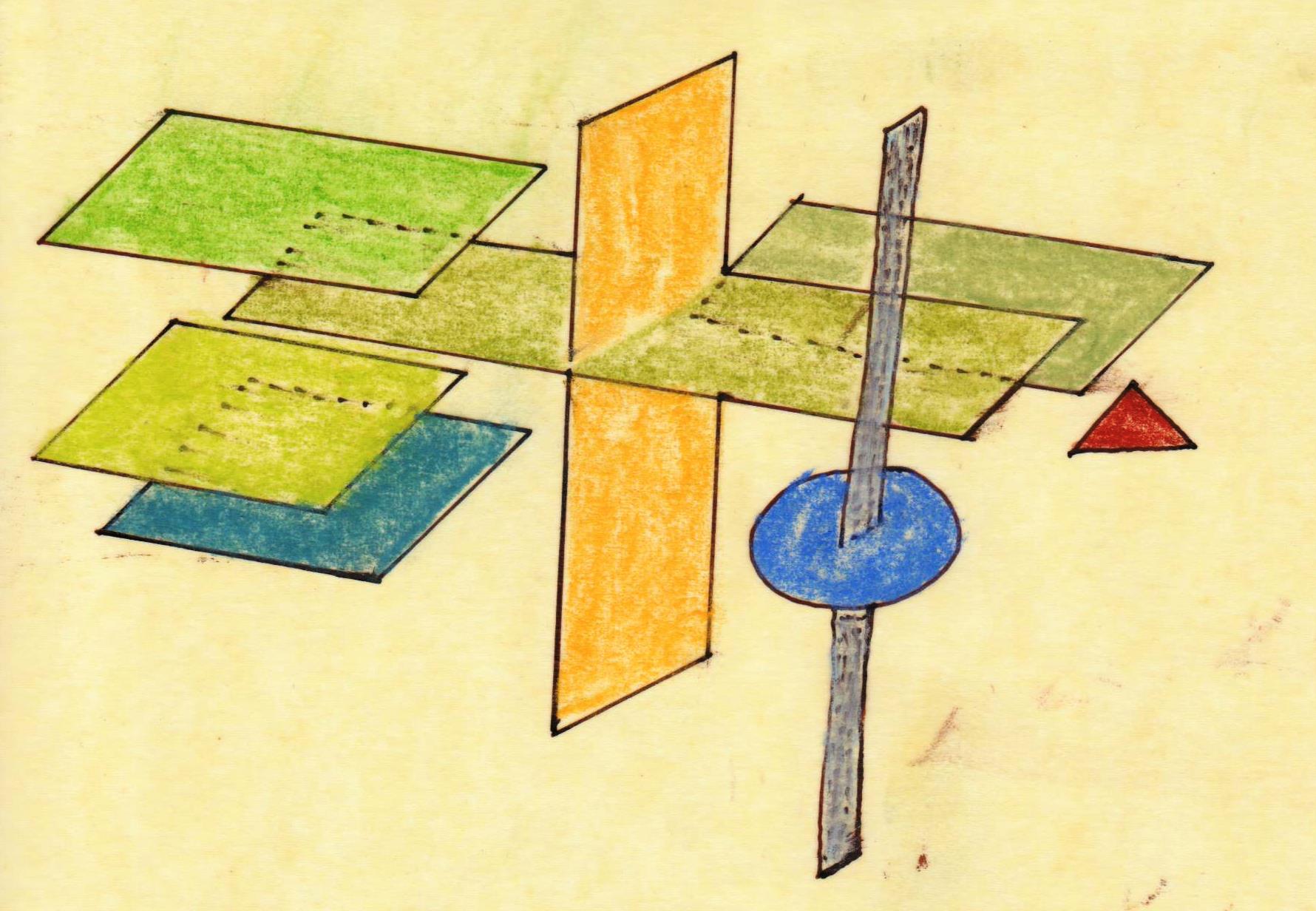
Landscape can be conceived as a series of continuing planes in space and time. Discontinuities or wrinkles in continuity might be found, but there is always at least one plane in which there is continuity in the landscape. The work of the landscape architect is to modulate those planes of continuity and discontinuity to transmit an idea, to create an aesthetic effect, to create more continuity in the landscape, to repair the landscape, or to reveal other planes in the landscape through discontinuities that reveal them or through new connections that give rise to new continuities that were not there before. By understanding the landscape in terms of continuous and sometimes discontinuous planes, the landscape architect, through the exercise traditionally known as site analysis, can reveal or discover those planes of continuity and those planes of discontinuity and then, given a concept or an idea, develop a conceptual design of how those planes will be related and modulated in the new landscape to be created.
 Flights of the Mind